
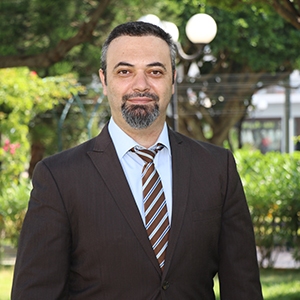
Prof. Seifedine Kadry
Lebanese American University
Speech Title: A Shallow Neural Network Approach forSolving Lung Cancer Time Delay Systems
Abstract: Lung cancer remains one of the leading causes of cancer-related mortality worldwide, driven by highly complex interactions between tumor cells, immune responses, and the surrounding biological environment. Accurately modeling these dynamics is essential for understanding disease progression and supporting the development of more effective therapeutic strategies. Traditional mathematical approaches based on differential equations provide valuable insights, yet solving nonlinear biological systems with multiple time delays remains a significant computational challenge.
This keynote presents a novel shallow neural network framework designed to solve a lung cancer time-delay model that captures the interactions among epithelial cells, immune cells, and cancer cells. The proposed architecture combines Log-Sigmoid and Radial Basis activation functions in a dual-hidden-layer structure optimized using Bayesian Regularization, enabling accurate approximation of complex nonlinear dynamics while mitigating overfitting. Numerical datasets are generated using a fourth-order Runge–Kutta reference solver and used to train, validate, and test the model under multiple biological scenarios.
The presentation will discuss the mathematical foundations of tumor–immune dynamics, the rationale behind the proposed neural architecture, and the role of activation functions and regularization techniques in improving predictive performance. Experimental results demonstrate exceptional accuracy, with near-perfect agreement between neural network predictions and reference numerical solutions, extremely low mean squared errors, and robust generalization across different initial conditions.
Beyond lung cancer modeling, the keynote will highlight how lightweight neural architectures can serve as efficient computational tools for solving complex biomedical differential systems. The discussion will conclude with future directions, including the extension of the framework to fractional-order biological models and its application to broader healthcare, engineering, and scientific modeling challenges.
Bio: Seifedine Kadry is a Lebanese academic and researcher specializing in data science, artificial intelligence, machine learning, and applied mathematics. He is a Professor of Data Science and ABET Coordinator at the Lebanese American University. He earned his PhD in Engineering Sciences from Blaise Pascal University in 2007 and later completed his HDR (Habilitation) from Rouen University in 2017. His research focuses on AI applications in medicine, Data Science, and smart systems. He is a Fellow of organizations including the Institution of Engineering and Technology (IET), AIIA, AAIA, and IETE.